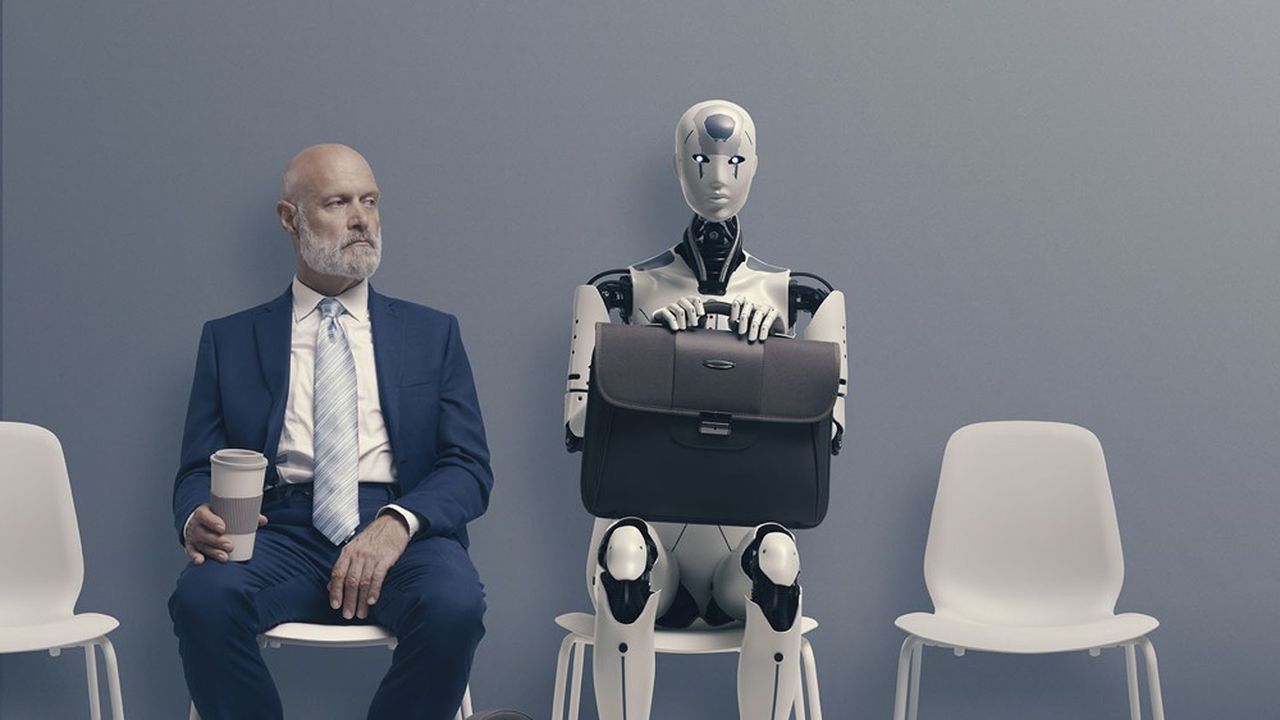
Lors de l’Agile Tour Montpellier 2024, nous, Emmanuel Sunyer et Thomas Serre, avons animé un atelier sur une question centrale : comment l’IA redessine le rôle du Scrum Master et du Coach Agile face à l’IA ? Sommes-nous prêts à recalibrer nos compétences pour y faire face ? Cette réflexion fait écho à une autre expérience que nous avons menée dans notre test de ChatGPT comme coach agile.
Comme vous allez le voir, les retours d’experts comme Henrik Kniberg et Kent Beck soulignent une chose essentielle : nous, professionnels de l’agilité, devons repenser nos postures et nos compétences. L’objectif n’est pas de combattre l’intelligence artificielle, mais de l’intégrer efficacement dans notre pratique quotidienne.
Scrum Master et Coach Agile face à l’IA : la genèse de notre réflexion
Depuis 2022, l’intelligence artificielle a bousculé de nombreux secteurs. Pour la communauté agile, la question est de savoir comment les rôles de Scrum Master et de Coach Agile vont évoluer face à ces outils puissants.
En mars 2024, l’article « Agile in the Age of AI » a lancé le débat. Il y était question d’un changement radical dans nos postures de coach agile, appuyé par des voix influentes. Henrik Kniberg, par exemple, annonçait que notre rôle « devient davantage celui d’un coach et moins celui d’un mentor/enseignant ».
Cette idée a été renforcée par Kent Beck, l’un des pionniers de l’agilité. Après avoir d’abord été réticent, il a reconnu que 90 % de ses compétences habituelles avaient été remises en question par l’adoption de technologies comme ChatGPT. Les 10 % restants avaient un effet de levier multiplié par mille.
Ces constats illustrent donc la nécessité pour les professionnels agiles de recalibrer leurs compétences pour rester pertinents dans un environnement en constante évolution.
Pour structurer cette réflexion, nous nous sommes appuyés sur le cadre de compétences du Coach Agile de Lyssa Adkins et Michael K. Spayd. Ce modèle distingue quatre postures fondamentales :
- Le Formateur, qui transmet le savoir ;
- Le Mentor, qui guide et partage son expérience ;
- Le Coach Professionnel, qui facilite le développement personnel ;
- Le Facilitateur, qui anime les dynamiques de groupe.
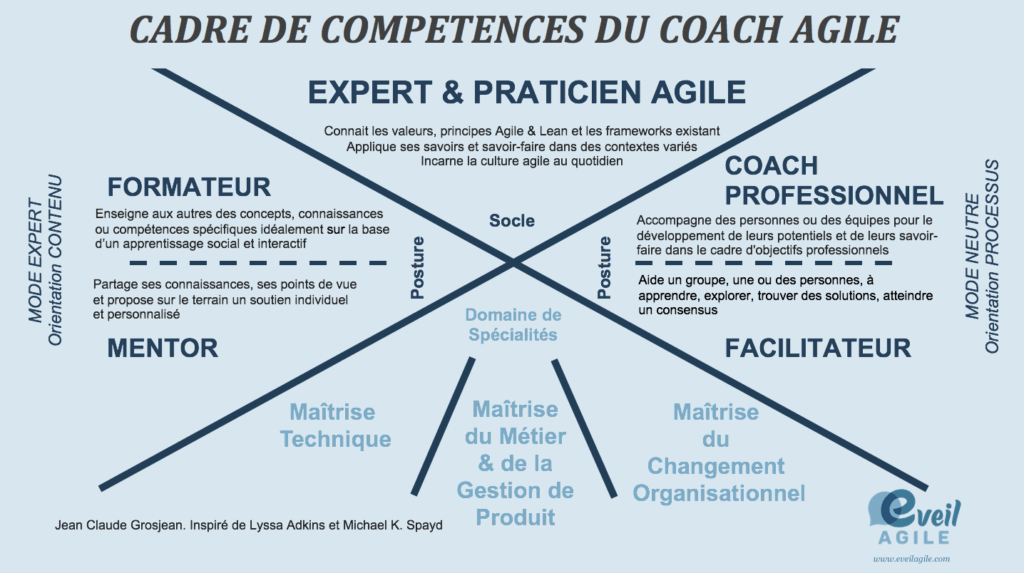
L’atelier proposé lors de l’Agile Tour Montpellier 2024 s’est ainsi concentré sur ces quatre postures pour comprendre l’impact de l’IA sur chacune d’elles.
Scrum Master et Coach Agile face à l’IA : déroulé de l’atelier collaboratif
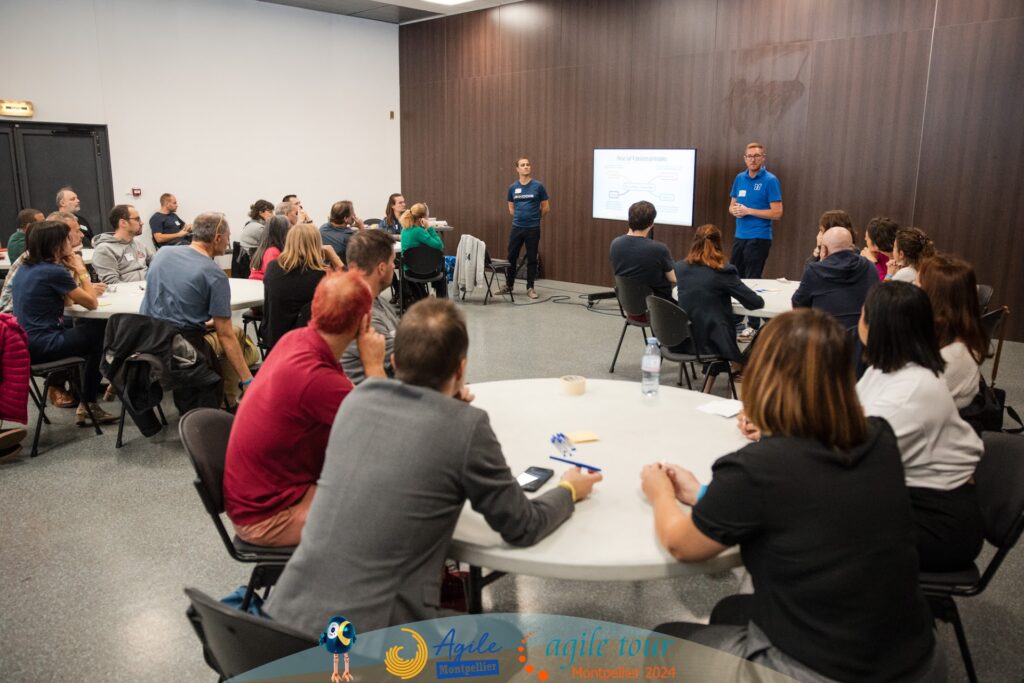
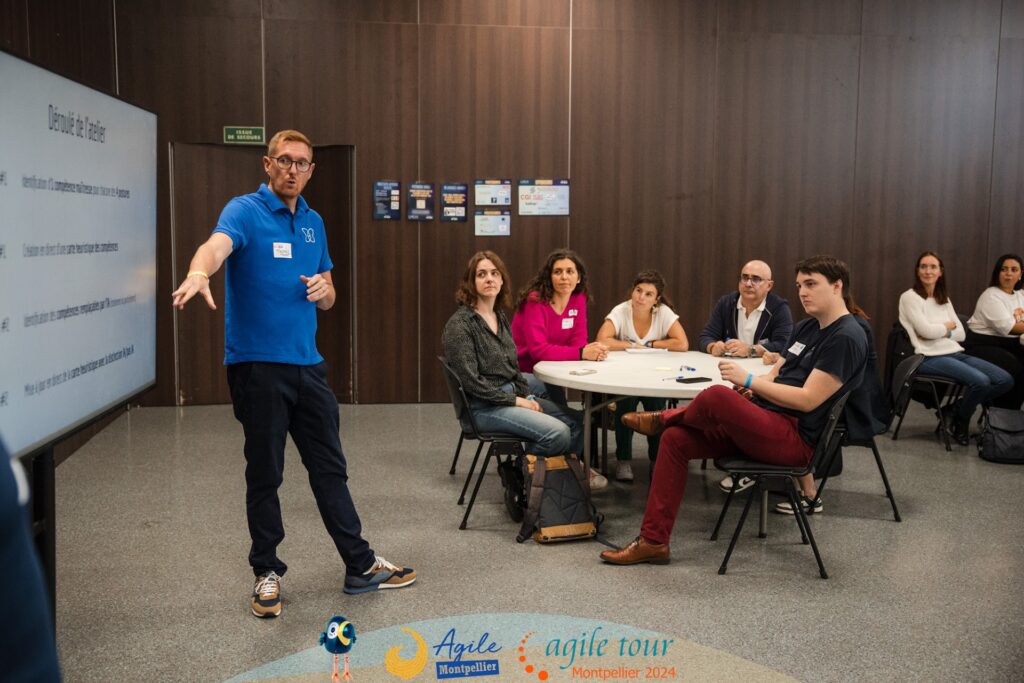
L’atelier a été organisé en quatre phases pour explorer, avec les 48 participants (8 tables de 6), comment l’intelligence artificielle pourrait impacter ou amplifier les compétences clés de chaque posture.
Éclosion #1 : Identifier les compétences maîtresses
Nous avons invité les participants à réfléchir ensemble à une compétence essentielle pour chaque posture (Formateur, Mentor, Coach professionnel, et Facilitateur). Ce moment de brainstorming a permis de mettre en lumière ce qui, selon eux, constitue le cœur du métier.
A chaque table, il y a eu 2 minutes en solo, puis 8 minutes en sextuor pour définir une compétence maîtresse par posture.
Récolte #1 : Créer une carte heuristique en direct
Les compétences identifiées ont ensuite été consignées en temps réel sur une carte heuristique projetée. Cet outil visuel a servi de base commune de réflexion pour la suite de l’atelier, rendant les liens entre les compétences et les postures clairs pour tous.
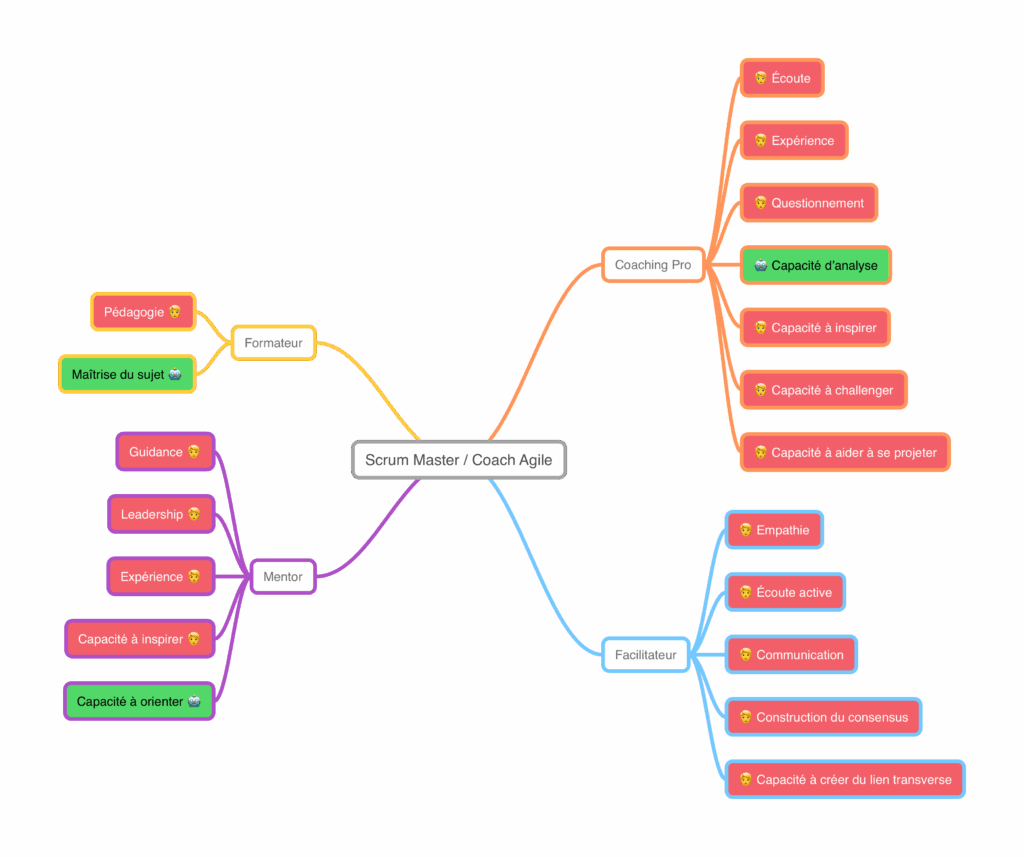
Pour exemple, sur la posture de Mentor, les compétences retenues ont été : guidance, leadership, expérience, capacité à inspirer, capacité à orienter.
Éclosion #2 : Identifier les compétences « IA-compatibles »
Dans cette deuxième phase, les participants ont évalué chaque compétence pour déterminer si elle pouvait être remplacée (totalement ou partiellement) ou si elle était augmentée par l’IA. Cette réflexion a suscité un débat enrichissant sur les limites actuelles et futures de l’IA. En suivant l’assertion = « La compétence XXX est dès à présent du côté de l’IA » et un vote romain (+1 / 0 / -1), avec un résultat vrai si le total des votes de la table était supérieur ou égal à 3.
Pour exemple sur les compétences de la posture de Formateur, la maîtrise du sujet a été confié à l’IA alors que la pédagogie est restée du côté de l’humain.
Récolte #2 : Mettre à jour la carte heuristique
La carte a été mise à jour en direct pour illustrer la séparation entre les compétences augmentées ou remplacées par l’IA et celles qui restent purement humaines. Ce travail visuel a renforcé la compréhension collective des zones où l’IA peut apporter un réel levier et celles où l’humain demeure irremplaçable.
Pour plus d’informations sur le déroulé de l’atelier, vous pouvez me contacter directement.
Scrum Master et Coach Agile face à l’IA : atelier et enseignements
Après ces phases d’idéation, les participants ont voté pour déterminer la ou les compétences par posture qui pourraient être réalisées par ou avec l’aide de l’IA.
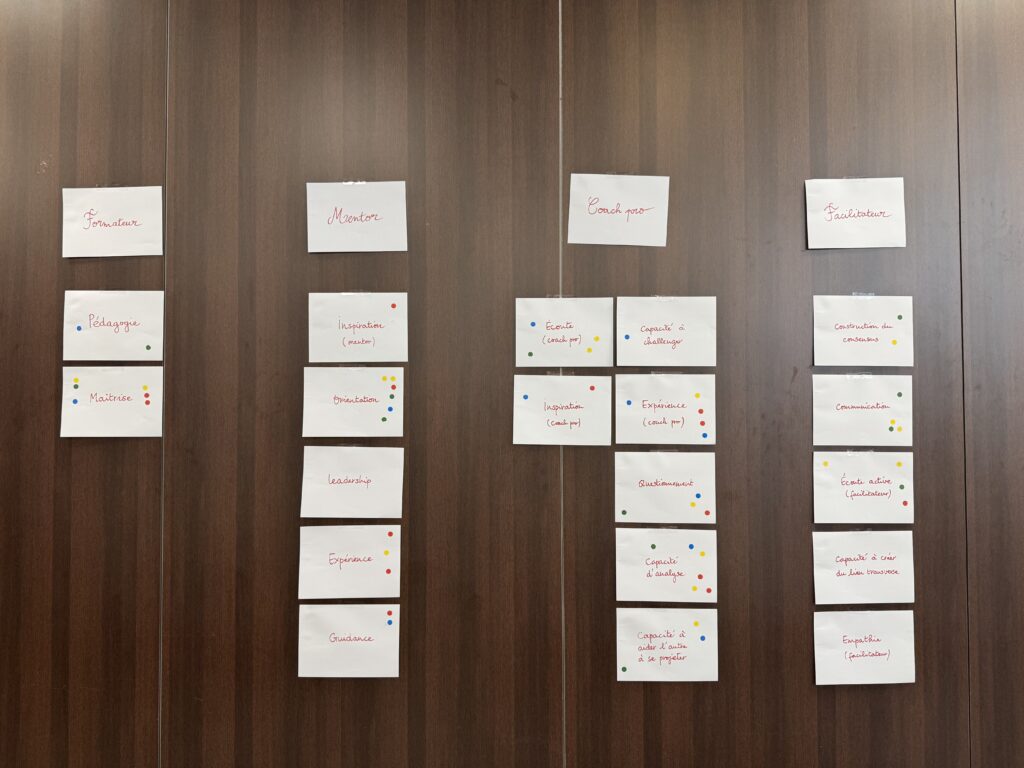
Résultats : compétences clés par posture pour Scrum Master et Coach Agile face à l’IA
Formateur : Maîtrise du sujet
Même si l’IA (comme un LLM) peut fournir rapidement des contenus fiables, la valeur du formateur réside moins dans le savoir brut que dans sa capacité à contextualiser et transmettre.
Mentor : Capacité à orienter
Les participants estiment que l’IA pourrait être un assistant à l’orientation, mais qu’elle ne peut pas remplacer l’intuition et l’expérience vécue d’un mentor humain.
Coaching professionnel : Capacité d’analyse
Si l’IA peut identifier des tendances, l’interprétation fine et l’adaptation à la complexité humaine restent des atouts humains essentiels.
Facilitateur : Aucune compétence remplaçable
De façon unanime, les participants n’ont pas identifié de compétence pouvant être complètement déléguée à l’IA. La gestion des interactions humaines, la création d’un climat de confiance et la lecture des dynamiques de groupe sont perçues comme profondément humaines.
Analyse collective
Les échanges ont fait émerger plusieurs constats :
- Les compétences les plus « remplaçables » par l’IA concernent l’accès et le traitement de l’information, et non la relation humaine.
- Les participants valorisent la nuance, l’interprétation et l’émotion comme des dimensions intrinsèquement humaines.
- La posture de Facilitateur ressort comme la plus « IA-résistante » car elle repose sur des dynamiques humaines en temps réel.
En bref, l’IA ne supprime pas la valeur du Scrum Master ou du Coach Agile, mais elle redessine le terrain de jeu en automatisant les tâches cognitives répétitives et en renforçant le rôle humain dans la relation et la co-construction. Les résultats de l’atelier montrent que Scrum Master et Coach Agile face à l’IA doivent adapter leurs compétences, en confiant certaines tâches aux outils intelligents tout en renforçant la relation humaine.
Scrum Master et Coach Agile face à l’IA : le point de vue des LLM
Pour compléter notre réflexion, nous avons interrogé plusieurs modèles de langage LLMs (ChatGPT, Claud et Gemini) afin de comprendre leur propre vision de l’impact sur ces métiers.
Résultats des compétences selon la posture substituable par l’IA
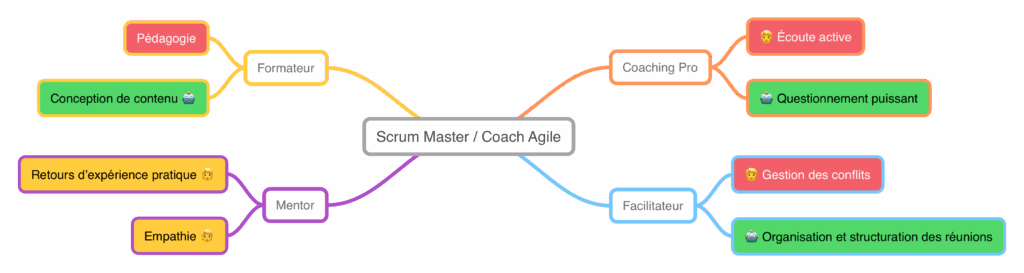
Formateur : Concepteur de contenu
Les LLM soulignent que la création et la personnalisation de contenus pédagogiques peuvent être assistées par l’IA. Cela libère le formateur pour qu’il se concentre sur la transmission et l’adaptation à l’humain.
Mentor : Non remplaçable
Selon les LLM, le rôle de mentor repose sur la relation humaine et le partage d’expériences personnelles. Ces dimensions émotionnelles et contextuelles sont difficiles à simuler.
Coach professionnel : Questionnement puissant
Le cœur du coaching, le questionnement puissant, est vu comme une compétence profondément humaine. L’IA peut aider à préparer des pistes, mais la dynamique de co-création et la compréhension des émotions sont irremplaçables.
Facilitateur : Organisation et structuration des réunions
La facilitation, notamment la logistique et la structuration des échanges, peut être optimisée par l’IA (création d’agendas, synthèses…). Cela permet au facilitateur humain de se concentrer sur la gestion des interactions complexes.
Cette étude révèle une chose : l’IA ne remplace pas les dimensions relationnelles et stratégiques du coaching agile. Elle offre plutôt un puissant levier pour automatiser les tâches répétitives.
Une contradiction à nuancer
Il est intéressant de noter une tension entre l’affirmation d’Henrik Kniberg (« moins de mentorat, plus de coaching ») et le résultat de notre étude avec les LLM. Si le coaching est confirmé comme une posture humaine, le mentorat est lui aussi perçu comme non substituable par l’IA.
Cette contradiction nous invite à nuancer : le mentor ne disparaît pas, il évolue. L’IA nous pousse à repenser ces rôles non pas en opposition, mais comme des complémentarités.
Conclusion
Vers un futur collaboratif : humain + IA
Les échanges de l’atelier et les résultats croisés avec l’IA mènent à un constat clair : l’avenir du Scrum Master et du Coach Agile se trouve dans la collaboration avec l’IA.
L’IA est un assistant puissant pour les tâches répétitives, libérant du temps pour les dimensions plus humaines du rôle. De leur côté, les participants ont mis en avant des compétences ancrées dans l’expérience, l’intuition et le jugement — autant d’éléments difficiles à simuler.
Cette complémentarité ouvre la voie à un recalibrage des postures :
- Confier à l’IA les tâches prévisibles ;
- Cultiver les compétences de relation, d’analyse contextuelle, et d’orientation.
Comme le résume si bien Jeff Sutherland : « Les grands gagnants ne sont ni les humains seuls contre les machines, ni les machines seules contre les humains, mais les équipes humaines qui intègrent les machines comme membres d’équipe. »
Scrum Master et Coach Agile face à l’IA ne disparaissent pas, ils se réinventent
La clé sera d’intégrer l’IA comme un levier, sans perdre les dimensions humaines qui font la force de ces rôles. Pour aller plus loin, découvrez comment ChatGPT peut déjà jouer le rôle d’un coach agile. L’enjeu n’est pas de savoir si l’IA va remplacer certaines compétences, mais comment nous allons l’intégrer pour enrichir notre impact et notre capacité à créer de la valeur.
Il reste alors à se demander :
- Jusqu’où sommes-nous prêts à déléguer nos tâches à des outils intelligents ?
- Et surtout… quelle part de notre rôle, 100 % humain, voulons-nous développer et affiner ?
Note importante : Ces résultats sont relatifs et doivent être interprétés avec prudence. Les perceptions des participants dépendent de leur expérience, de leur familiarité avec l’IA et, dans le cas des opinions fournies par les LLM, de la qualité des prompts utilisés. Ces votes représentent un instantané des intuitions d’un groupe, un point de départ pour la réflexion, et non une conclusion définitive.